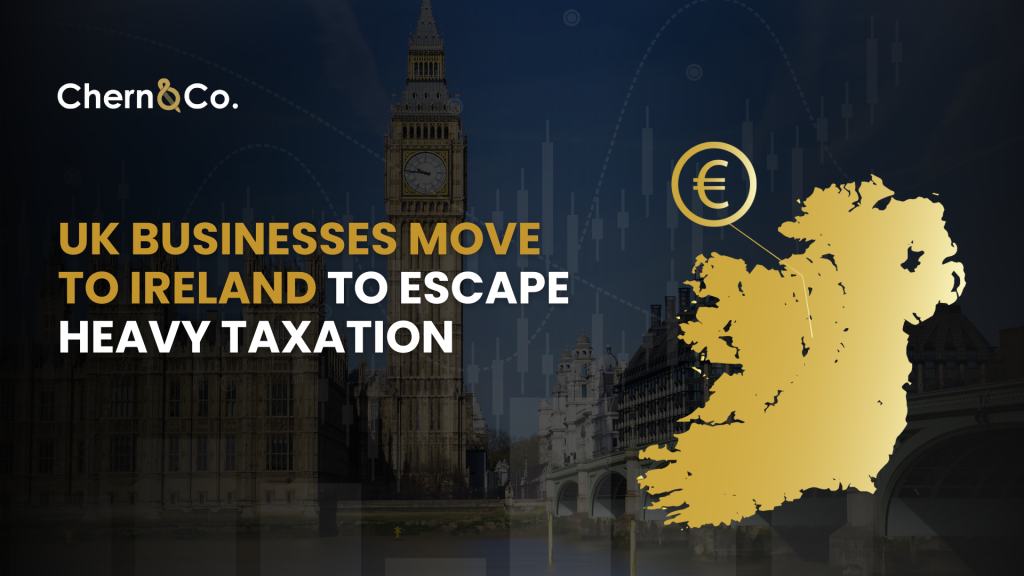
In a post-Brexit world, many founders—especially location-independent entrepreneurs—compare Ireland and the UK to decide where to incorporate. Both are English-speaking, common-law jurisdictions. The key differences lie in corporation tax, EU market access, and a few local legal requirements that can shape cost, speed, and long-term scalability. This guide highlights the real-world trade-offs so you can choose with confidence.
Key Takeaways
- Tax: Ireland’s standard trading corporation tax rate is 12.5%. The UK’s main rate is up to 25% (with small-profits relief in some cases).
- EU Access: An Irish company is an EU entity with seamless single-market access. A UK company is outside the EU and faces customs/VAT formalities when selling into the EU.
- Speed & Cost to Incorporate: UK incorporation is often same-day and low fee. Ireland typically takes 3–7 working days with modest state fees.
- Local Requirements: Both require a registered office. Ireland also requires an EEA-resident director or a Section 137 bond for non-EEA boards.
- Banking: Both support digital business accounts; traditional Irish bank accounts usually require in-person verification.
At-a-Glance Comparison
| Factor | Ireland (IE) | United Kingdom (UK) |
|---|---|---|
| Corporate Tax (trading) | 12.5% | Up to 25% (small-profits relief may apply) |
| EU Single-Market Access | Yes (EU & Eurozone member) | No (outside EU; customs/VAT formalities for EU trade) |
| Language / Legal System | English / Common law | English / Common law |
| Incorporation Speed | ~3–7 working days | Often same-day |
| Director Residency Rule | EEA-resident director or Section 137 bond | No residency requirement |
| Registered Office | Required (physical Irish address) | Required (physical UK address) |
| Digital Banking | Available (e.g., Wise, Revolut Business) | Available (various providers) |
Choosing Ireland for EU access? Start with our non-resident company formation package, or see the full Irish company formation service.
Corporate Tax: Ongoing Savings vs. One-Time Speed
Ireland’s 12.5% trading rate is a central reason founders choose Dublin. The UK’s main rate has increased, creating a wider gap for profitable, growing businesses. Because tax applies every year, a lower rate can outweigh the UK’s faster, cheaper one-time incorporation.
EU Membership & Market Access
An Irish company is an EU company. That means friction-light access to 27 member states, EU regulatory alignment, and the euro for most cross-border transactions. A UK company, post-Brexit, faces customs declarations and VAT/OSS complexities when selling into the EU—costs and admin you may avoid with an Irish entity.
Formation Speed, Costs & Ongoing Admin
The UK excels in speed and low filing fees—great when you need a company today. Ireland typically completes incorporation within a week once documents are in order. In both jurisdictions you file annual returns and accounts; both offer mature online filing systems. For many founders, the incremental delay in Ireland is acceptable given the ongoing EU and tax advantages.
Registered Office & Director Requirements
Both countries require a registered office (a physical address for official correspondence). If you’re fully remote, this is commonly solved via a compliant virtual office service with mail scanning/forwarding.
Ireland additionally requires at least one EEA-resident director or, if none, a Section 137 bond (a two-year insurance bond that satisfies the residency rule). The UK has no director residency requirement, which can simplify structures for entirely non-resident founders.
Banking & Payments
Most founders begin with a digital business account for speed and remote onboarding. Traditional Irish bank accounts often require a local visit and more documentation but can be added later as the business grows.
Who Should Choose Which?
- Choose Ireland if EU access, lower corporation tax, and an English-speaking environment are priorities.
- Choose the UK if your market is primarily the UK and you value same-day setup above all else.
- Choose both if you need dedicated EU and UK footprints (e.g., IE for EU trade, UK Ltd for UK contracts).
FAQs
Can I incorporate remotely?
Yes. Both Ireland and the UK support remote incorporation. You will still need a local registered office address in the country of incorporation.
Do I need an Irish resident director?
You need at least one EEA-resident director or a Section 137 bond. Many non-EEA founders simply budget for the bond.
How fast can I open a bank account?
Digital accounts can be opened quickly once your company is active. Traditional Irish banks typically require in-person verification.
Next Steps with Chern & Co
We help founders set up correctly from day one: Irish company formation, registered office with mail scanning, company secretary, RBO filing, IPN / PPS registrations for directors, Corporation Tax & VAT registrations, and (if needed) Section 137 bond or nominee director arrangements. If you’re comparing Ireland and the UK, we’ll map the costs, timelines, and compliance so you can launch with clarity.
Get Personalised Guidance 🤝
Let our experts provide personalized guidance to ensure you are fully compliant and optimized for tax efficiency. Fill out the form below to schedule your consultation.
⚠️ If the message field is left empty, you will simply be subscribed to our newsletter and will not receive a personal response.